This is one of the most common questions among creative students who want to study abroad. At first glance, the two majors can look very similar. Both involve design. Both may require a portfolio. Both use studio work, drawing, software, and project presentations. Both can lead to work in the built environment.
But they are not the same major, and choosing the wrong one can leave a student frustrated after the first year.
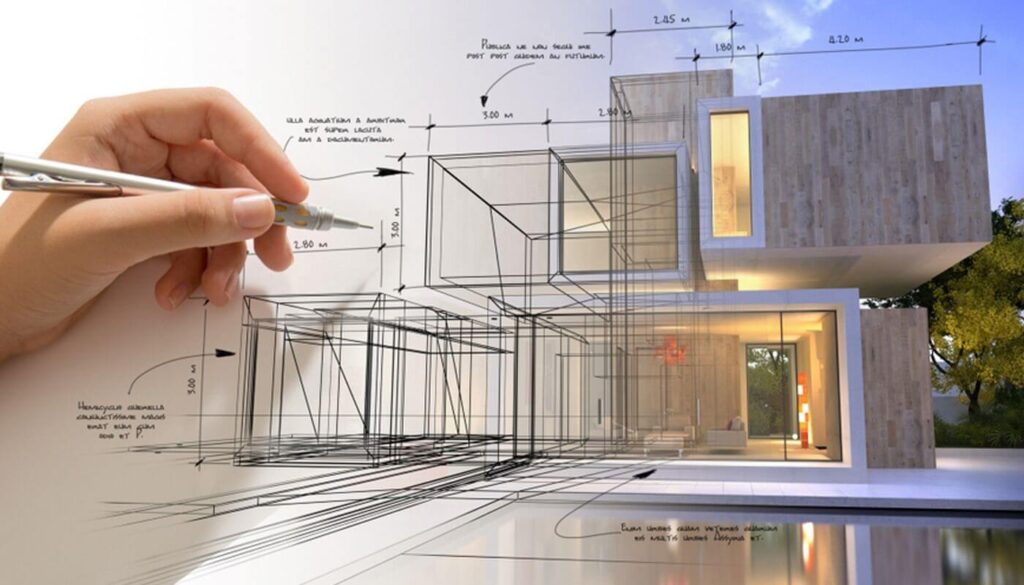
The difference between architecture and interior design is mainly about scope, responsibility, and design focus. Architecture is concerned with buildings and the wider built environment, including form, structure, systems, and spatial planning at the building scale. Interior Design is concerned with how people experience interior spaces, including function, safety, layout, materials, atmosphere, and the human use of indoor environments.
In simple terms, architecture asks, “How should this building be conceived, shaped, and organized?” Interior design asks, “How should the inside of this space work, feel, and support the people using it?”
That may sound like a small difference, but it changes almost everything, your coursework, your studio projects, your software use, your portfolio direction, and the type of professional role you may pursue later.
A useful way to explain it is this: Architecture focuses more on buildings as complete systems, while Interior Design focuses more on the quality, function, and experience of the spaces inside them.
If you are an international student deciding between the two, the smartest approach is not to compare the major names only. Compare what you will actually study, what kind of projects you will produce, and what kind of designer you want to become.
Quick Comparison Table, Architecture vs Interior Design
| Area | Architecture | Interior Design |
| Core focus | Building design, structure, systems, and spatial planning at the building scale | Interior environments, user experience, function, materials, layout, and atmosphere |
| Main level of design | Whole building and built-environment scale | Interior room, interior sequence, and space-user scale |
| Typical questions | How should the building stand, work, and relate to its site? | How should people use, move through, and feel inside the space? |
| Technical emphasis | Strong focus on structural thinking, building systems, planning, and regulatory frameworks | Strong focus on space planning, materials, finishes, user needs, safety, and code-aware interior solutions |
| Studio output | Building concepts, plans, sections, models, site studies, technical drawings | Interior layouts, mood concepts, material boards, detailed interior plans, user-centered spatial solutions |
| Work environment | Architectural firms, planning teams, site-based project coordination, construction review | Interior design studios, commercial design firms, hospitality, residential, retail, workplace, and space planning roles |
| Professional direction | More likely to lead toward architect-track preparation, though licensing varies by country | More likely to lead toward interior design practice, spatial design, and specialist interior sectors |
| Best fit for you if… | You care about buildings, urban context, and technical design at a broader scale | You care about how people experience interiors, layouts, materials, and design atmosphere |
What Is Architecture?
The University of Kentucky describes architecture as a program for students who are passionate about designing buildings and spaces that are both functional and aesthetically pleasing. Its overview highlights design principles, structural engineering, environmental sustainability, and studio-based learning, and notes that graduates may move into careers such as architecture, urban planning, and related built-environment roles.
That definition shows why architecture is broader than many students first assume. Architecture is not only about drawing attractive buildings. It combines creativity with technical systems, structural thinking, environmental response, planning logic, and the relationship between buildings and their surroundings.
An architecture student often works with big questions. How should a building respond to a site? How do circulation, light, structure, and use work together? How do materials and systems support the design? How should a building function over time?
This is why architecture tends to feel broad, strategic, and technically demanding. Even when the work is highly creative, the designer is usually thinking about the whole built system, not only one room or one atmosphere.
What Is Interior Design?
The New York School of Interior Design defines interior design as being about how we experience spaces, and describes it as a field that shapes how we live, work, play, and even heal. It also explains that interior designers need knowledge of materials, color, space planning, sustainability, CAD and BIM software, structural requirements, health and safety issues, and building codes.
This matters because many students, and even some parents, mistakenly reduce Interior Design to decoration. That is not accurate.
Interior Design is a professional design field that deals with the planning and shaping of indoor environments. It is concerned with how a space functions, how it supports human behavior, how safe and effective it is, and how materials, layout, and atmosphere work together.
A student in Interior Design is often thinking about people first. How will users move through the space? What makes the space efficient, comfortable, safe, and emotionally effective? How should material choices support the project? How do the client’s needs translate into a workable interior solution?
So while Architecture often begins at the building level, Interior Design usually begins at the interior human-experience level.
The Main Difference Between Architecture and Interior Design
The main difference is whole-building design versus interior-space design.
Building design vs interior space design
Architecture is more concerned with the design of the building as a whole, including its form, systems, site response, and overall organization. Interior Design is more concerned with the use, performance, and experience of the spaces inside that building.
Imagine a new university library. An architect may think about the building mass, entrance sequence, structural layout, natural light strategy, and how the building relates to the campus. An interior designer may think about how students move inside, where reading zones should be placed, how acoustic comfort works, what materials support concentration, and how the interior atmosphere fits the users.
Both roles matter. They simply begin from different scales of design thinking.
Structural responsibility vs spatial experience and function
Architecture usually carries stronger emphasis on structure, planning logic, and building-scale systems. The BLS says architects plan and design houses, factories, office buildings, and other structures, which makes the building-level focus very clear.
Interior Design also requires technical knowledge, but its responsibility is often more closely tied to space requirements, safety, usability, and the indoor environment. The BLS says interior designers make indoor spaces functional, safe, and beautiful by determining space requirements and selecting essential and decorative items.
That is an important distinction for students. If you are fascinated by how buildings stand, work, and relate to a city or site, architecture may fit better. If you are more interested in how spaces feel, function, and serve real users on the inside, interior design may be the stronger choice.
Technical licensing pathway vs design practice pathway
Another important difference is the long-term professional path. The BLS notes that becoming a licensed architect in the United States typically involves completing a degree, gaining relevant experience through a paid internship, and passing an exam.
Interior Design can also involve regulation and credentialing. NYSID notes that in many U.S. states and jurisdictions, interior design practice is subject to licensing or title-related requirements, and that accredited education is increasingly important.
However, this is where students need to be careful. Licensing rules vary by country. Program structure also varies a lot between Turkey, Europe, the Gulf region, North America, and other destinations. So the article should not promise a universal licensing path. Instead, the best advice is to compare the degree structure and check the official regulations in the country where you plan to study and work later.
What Will You Study in Each Major?
This section often helps students make a final decision because titles can be misleading. Some universities offer Architecture. Others offer Interior Architecture. Others offer Interior Design, Interior Architecture and Environmental Design, or similar names. The content can overlap, but the direction is usually still visible in the curriculum.
Core architecture courses
Architecture programs usually include strong studio work plus subjects such as design theory, architectural history, technical drawing, environmental systems, structures, sustainability, construction methods, and digital design tools.
The studio culture is often intense. Students may produce site analysis, models, plans, sections, conceptual development, and building-level proposals. The workload can be demanding because the projects are broad in scope and often require both creative and technical resolution.
A student who enjoys thinking about buildings as complete systems usually feels energized by this kind of challenge.
Core interior design courses
Interior Design programs usually include space planning, materials, finishes, furniture systems, lighting, sustainability, CAD and BIM tools, design communication, and human-centered interior problem solving.
The work is still technical and still creative, but the design questions are usually closer to the interior environment and user experience. Students often work on hospitality, residential, workplace, retail, healthcare, or commercial interior projects, where function and atmosphere must work together.
A student who loves transforming indoor environments, thinking about user comfort, and solving interior layout problems often feels at home in this major.
Studio workload, software, and project style differences
Both majors involve studio work, but the style of work often feels different.
Architecture studios usually push students toward larger-scale problem solving. The work may involve more site response, building massing, conceptual development, and the technical logic of whole buildings. The timeline of a project can feel long and layered.
Interior Design studios usually push students toward the performance and identity of indoor space. That can include furniture planning, user journey, zoning, materiality, lighting, and detailed interior atmosphere. The work can still be demanding, but it is often more closely tied to the lived experience of a space.
Both fields use digital tools. NYSID specifically highlights CAD and BIM as part of Interior Design preparation. Architecture programs also rely heavily on digital and technical tools as part of design development and communication.
If you are a student who enjoys both art and technical structure, you should pay attention to which scale excites you more, the building or the interior.
Similarities Between Architecture and Interior Design
These majors are connected for a reason. Both are design disciplines. Both are part of the built environment. Both require creativity, communication, software literacy, research, and the ability to turn an idea into a professional proposal.
Both fields also involve client needs, codes, safety, sustainability, and teamwork. Interior designers often work with architects, engineers, contractors, and suppliers. Architects also work closely with clients, engineers, and construction teams.
This overlap is why many students confuse the majors. A strong design student could potentially enjoy either one. The difference is not whether you are creative enough. The difference is what kind of design problem you want to spend years solving.
Career Paths and Work Environments
Most students asking this question are really asking a deeper one: “What kind of work life will this major lead to?” That is exactly the right question.
Architects, planners, and built-environment roles
The BLS states that architects plan and design structures such as houses, factories, and office buildings. It also notes that they work in offices, meet clients, consult with engineers and other architects, and visit construction sites to review progress.
That makes architecture more naturally aligned with building-scale design practice, project coordination, planning-related pathways, and broader built-environment problem solving. Depending on the country and licensing system, graduates may work toward architect-track careers, planning-related roles, design offices, development contexts, or sustainable built-environment projects.
This is usually the better fit for the student who says, “I care about buildings, not only rooms.”
Interior designers, spatial designers, and commercial design roles
The BLS states that interior designers make indoor spaces functional, safe, and beautiful by determining space requirements and selecting essential and decorative items. It also notes that many work in specialized design services or in architectural, engineering, and related services.
That makes Interior Design more naturally aligned with hospitality, residential, retail, commercial interiors, workplace design, and user-focused space planning. NYSID also stresses that interior designers need broad interdisciplinary skills, which reflects the real nature of the field.
This is usually the better fit for the student who says, “I care about how people actually live, move, work, and feel inside a space.”
Which Major Fits You Better?
There is no universal winner here. The better major is the one that matches the kind of design problems you genuinely enjoy.
Choose architecture if you care about buildings, structure, and urban space
Architecture may be the better fit if you are drawn to buildings as complete systems. You may enjoy site relationships, structure, spatial planning at a large scale, environmental response, and the idea of shaping the broader built environment.
This major often suits students who are comfortable with technical depth, long studio projects, and a strong mix of design and systems thinking.
For example, a student who gets excited by skylines, public buildings, housing design, campus layouts, and the way buildings shape cities usually belongs closer to architecture.
Choose interior design if you care about how people use and experience interiors
Interior Design may be the better fit if you are more interested in spatial experience, atmosphere, materials, furniture systems, user comfort, and the function of interior environments.
This major often suits students who enjoy people-centered design, visual detail, practical space planning, and creating environments that support everyday use in a powerful way.
For example, a student who notices lighting, layout, movement, texture, and the emotional effect of a room often finds Interior Design more personally meaningful than whole-building design.
Studying Architecture and Interior Design in Turkey and Abroad
For international students, country and university choice matter a lot. Program names are not always standardized.
In Turkey, you may find majors such as Architecture, Interior Design, or Interior Architecture and Environmental Design. Abroad, you may also see Interior Architecture, Spatial Design, or related built-environment degrees. That means you should compare the curriculum, not just the title.
| Question to ask | Why it matters |
| Is the program architecture, interior design, or interior architecture? | Titles may look similar but lead to different training and portfolio outcomes. |
| How much technical studio work is included? | Shows whether the program leans toward systems and building design or interior problem solving. |
| Is a portfolio required for admission? | Important for preparation and realistic application planning. |
| What software and drawing skills are emphasized? | Helps you understand how technical and industry-ready the program is. |
| Are there internships with design firms, construction teams, or commercial studios? | Reveals the likely professional ecosystem around the degree. |
| What are the local licensing or professional recognition rules? | Essential if you want long-term career mobility after graduation. |
If you are exploring related creative majors, this is also where internal cluster reading becomes useful. A student comparing architecture and interior design may later want to compare Graphic Design and Visual Communication Design, especially if they discover they enjoy creative problem solving but are less interested in the built environment itself.
If you already know that you want interior-focused study, the current StudySehir Interior Design guide is a strong next step because it explains admissions, portfolios, and study options in more detail.
Common Mistakes Students Make
One common mistake is assuming Interior Design is only about decoration. Authoritative sources clearly show that it includes space planning, codes, safety, technical software, and professional design decision making.
Another mistake is choosing Architecture because it sounds more prestigious, even when the student is actually more interested in interior atmosphere, materials, and user experience. This often leads to frustration because architecture projects can be broader, more structural, and more building-focused than expected.
A third mistake is choosing Interior Design while imagining a career centered on designing entire buildings. Interior Design can be highly technical and deeply creative, but its main focus is usually the interior environment, not the complete building system.
A fourth mistake is ignoring regulation and recognition. Both architecture and interior design can involve professional requirements, but those vary by country. You should always verify official rules before assuming how a degree will transfer internationally.
FAQ
Is interior design easier than architecture?
Not necessarily. The two majors are demanding in different ways. Architecture often involves broader technical and building-scale challenges, while Interior Design requires strong user-centered thinking, material knowledge, space planning, and detailed design resolution.
Does architecture include interior design?
Architecture may touch interior space planning as part of whole-building design, but that does not mean it offers the same depth as a dedicated Interior Design program. Interior Design goes much deeper into the function and experience of interior environments.
Which major has more drawing and studio work?
Both can involve heavy studio work. Architecture often focuses more on building-scale drawings, massing, technical development, and site-based proposals. Interior Design often focuses more on interior layouts, spatial experience, materials, and detailed indoor environments.
Which one is better for working internationally?
Both can support international careers, but the answer depends on your specialization, software skills, portfolio quality, language ability, and local regulations in the country where you want to work. Always verify recognition and licensing requirements in your target market.
Which major is better in Turkey?
That depends on the university, program title, studio culture, teaching language, and your career goal. In Turkey, the best choice is the one whose curriculum matches whether you want to work at the building scale or the interior-space scale.
References
[1] Bachelor’s Degree in Architecture, University of Kentucky
[2] What is Interior Design?, New York School of Interior Design
[3] Interior Design vs. Interior Architecture: What’s the difference?, Falmouth University