For aspiring doctors in Pakistan, the dream of wearing a white coat is often met with the harsh reality of limited seats and intense competition. This is where pursuing an MBBS in Turkey for Pakistani students emerges as a golden opportunity. Turkey offers a unique blend of advanced medical education, cutting-edge university hospitals, and a cultural environment that feels like a second home, all while being significantly more affordable than studying in the UK, USA, or Canada.
With our 8+ years of dedicated experience at StudySehir, we have guided hundreds of Pakistani students through this journey. We understand the nuances, the parental concerns about recognition, and the student’s ambition for a global career. This guide is a culmination of that expertise, designed to give you a clear, honest, and comprehensive roadmap to becoming a doctor through the Turkish education system.
Is Turkish Medical Education Recognized?

The most common question we get is about recognition.
- WFME & ECFMG: Most Turkish medical faculties are accredited by the World Federation for Medical Education (WFME). This is crucial because it allows you to take the USMLE and work in the USA.
- Pakistan Medical Commission (PMC): Since Turkey’s medical education is globally recognized and follows the WFME standards, graduates are eligible to appear for the National Licensing Exam (NLE) in Pakistan after graduation.
- Bologna Process: Turkey is part of the European Higher Education Area, meaning your degree is recognized across all of Europe.
Why a Turkish Medical Degree is a World-Class Choice
Choosing to study medicine in Turkey is a strategic decision that pays dividends for a lifetime.
- High-Quality, Globally-Recognized Education: Turkish medical faculties follow a rigorous curriculum that aligns with both European and American standards. Your degree is recognized by the World Health Organization (WHO) and listed in the World Directory of Medical Schools (WDOMS).
- Extensive Clinical Training: A major advantage of studying in Turkey is the access to massive, high-tech university hospitals. From year 4 onward, you will be engaged in extensive clinical rotations, working with real patients under the supervision of expert physicians.
- Affordable Excellence: The cost of a 6-year medical degree in Turkey, even at top private universities, is often less than a single year in the US. This makes a world-class medical education accessible without overwhelming financial strain.
- Pathway to Global Practice: A Turkish medical degree opens doors to postgraduate specialization and practice worldwide, including the US (via USMLE), the UK (via PLAB), and the EU.
Suggested article: Why Study in Turkey for Pakistani Students
Top Private Universities for Medicine: Where Clinical Practice Meets Modern Education
Private universities are the preferred choice for most international students seeking to study medicine in Turkey. They offer 100% English-taught programs, guaranteed clinical placements in their own private hospitals, and a highly supportive environment. Here are the institutions we at StudySehir recommend with full confidence.
1. Istanbul Medipol University
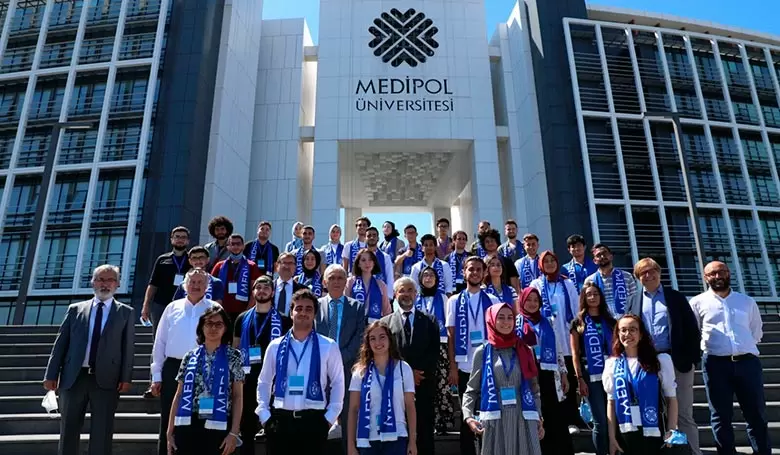
Istanbul Medipol university is arguably one of the best choices for medical studies in Turkey. It boasts the Medipol Mega University Hospital, one of the largest private medical complexes in the country, equipped with the latest technology like the Da Vinci surgical robot. Students get unparalleled hands-on experience from an early stage.
Why Choose Medipol? Exceptional clinical infrastructure, strong focus on research, and a dedicated international student office. Their English medical program is highly sought after.
2. Istinye University

Affiliated with the massive MLP Care Group (which includes Liv Hospital and Medical Park), Istinye University provides its students with immediate access to a network of 30+ hospitals across Turkey. This ensures a diverse range of clinical cases and a deep understanding of the healthcare system.
Why Choose Istinye? Unmatched network of affiliated hospitals, a modern campus, and a curriculum that integrates clinical science from the very first year.
3. Bahçeşehir University (BAU)

BAU’s Faculty of Medicine is located in Göztepe, right next to its affiliated Medical Park hospital. Bahçeşehir University (BAU) is known for its global vision and strong academic faculty, many of whom have international experience. It is a fantastic option for students who want a dynamic and globally-connected education.
Why Choose BAU? Strong global brand, excellent location, and a focus on producing doctors who can practice anywhere in the world.
4. Istanbul Aydın University (IAU)

Istanbul Aydın University (IAU) offers a well-rounded medical education with its own university hospital and a strong emphasis on practical skills. The university is known for its vibrant campus life and supportive environment for international students, making the study in Turkey for Pakistani students experience very positive.
Why Choose IAU? A great balance of academic rigor and student life, with modern facilities and a dedicated faculty.
5. Üsküdar University

Üsküdar University has a unique focus on behavioral sciences and health, making it an excellent choice for students interested in the intersection of medicine and psychology. It is affiliated with the NPİSTANBUL Brain Hospital, a leading institution in neuropsychiatry.
Why Choose Üsküdar? Specialized focus on neuropsychiatry and a strong academic tradition in health sciences.
Public Medical Universities in Turkey
Public universities offer the most prestigious and affordable medical education. However, they require exceptional scores in standardized tests.
1. Hacettepe University – Ankara

Hacettepe university is the undisputed leader in Turkish medicine.
- Medium: English & Turkish.
- Admission: Requires a near-perfect SAT score (1500+) or top TR-YÖS ranking.
2. Istanbul University (Çapa) & Cerrahpaşa

These are the most historic medical schools in Turkey.
- Medium: English & Turkish.
- Admission: Primarily based on the university’s own YÖS exam or TR-YÖS.
3. Ankara University

Located in the capital, it offers a highly respected English-medium medical program.
- Admission: Very competitive; requires high TR-YÖS scores.
Read more: Top Medical Universities in Turkey for International Students (2026 Rankings)
The PMC Recognition Question: What You MUST Know
This is the most critical question for every Pakistani medical aspirant. As of 2026, the Pakistan Medical Commission (PMC), now transitioning back to PM&DC, recognizes universities based on a set of criteria, including the university’s accreditation and listing in global directories. Here’s the process:
- University Recognition: Several top Turkish universities, including Istanbul Medipol University and Istanbul University, have been recognized by the PMC in the past. The list is subject to change, and we always advise checking the latest official PM&DC website.
- The Pathway to Practice in Pakistan: Upon graduating from a recognized Turkish university, you will be required to pass the National Registration Examination (NRE), also known as the National Licensing Exam (NLE) or its future equivalent (NEXT), to be granted a license to practice medicine in Pakistan.
StudySehir’s Role: We provide the most up-to-date information on recognized universities and guide you through the entire process, ensuring you choose a university that meets the requirements for your future career in Pakistan.
The 6-Year Medical Curriculum in Turkey
The journey to becoming a doctor in Turkey is a comprehensive 6-year program.
- Years 1-2 (Pre-Clinical): Focus on foundational sciences like Anatomy, Physiology, Biochemistry, and Histology.
- Year 3 (Pathology & Pharmacology): Introduction to diseases and their treatments.
- Years 4-5 (Clinical Rotations): The most exciting phase, where you will rotate through different hospital departments (e.g., Internal Medicine, Surgery, Pediatrics, Gynecology) and interact with patients.
- Year 6 (Internship / Staj): You will work as a pre-doctor (intern) in a university hospital, taking on more responsibility under supervision. This year is crucial for practical experience.
Admission Requirements for MBBS
Competition for medical seats is high, even in private universities.
- Academic Background: A-Levels in Biology, Chemistry, and Physics with top grades (A/B) or HSSC (Pre-Medical) with a high percentage (85%+).
Entrance Exams:
- Most private universities require a strong SAT score (1300+ is competitive for medicine) or the TR-YÖS exam.
- Some, like Istinye University, may have their own entrance exam.
- English Proficiency: A high score on TOEFL (85+) or IELTS (6.5+).
Tuition Fees for Medicine
| University Type | Annual Tuition Fee (Approx.) |
|---|---|
| Public Universities | $1,000 – $3,000 |
| Private Universities | $15,000 – $28,000 |
StudySehir Tip: While private medical fees are higher, we can often secure partial scholarships or flexible payment plans for our students.
Frequently Asked Questions (FAQs)
1. Can I study MBBS in Turkey in English?
Yes, all the universities mentioned above offer 100% English-medium medical programs. However, you will learn basic Turkish in the first 3 years to communicate with patients during clinical years.
Is there an age limit for MBBS in Turkey?
Generally, there is no strict age limit, but students who have recently completed their high school are preferred.
Do I need to take the MDCAT for Turkey?
No, Turkish universities do not require the Pakistani MDCAT. They use their own entrance criteria (SAT, TR-YÖS, or High School grades).
Can I work as a doctor in Turkey after graduation?
Yes, but you must clear the TUS (Medical Specialization Exam) if you wish to specialize in Turkey, and you must be proficient in Turkish.
1. What is the TUS exam in Turkey?
The TUS (Tıpta Uzmanlık Sınavı) is the specialty exam you take after graduating with your MD degree to pursue residency and become a specialist (e.g., a cardiologist or neurosurgeon) in Turkey.
Can I do my clinical rotations in Pakistan?
No, the clinical rotations are an integrated part of the Turkish medical curriculum and must be completed in the university’s affiliated hospitals in Turkey.
3. Is the cost of living included in the tuition fees?
No, tuition fees cover academics only. You should budget separately for accommodation, food, and other living expenses. Our Cost of Living in Turkey for Pakistani Students guide provides a detailed breakdown.
Is it difficult to learn Turkish?
While your medical program will be in English, learning Turkish is essential for effective communication with patients during your clinical years. Most universities offer Turkish language courses alongside your medical studies.