If you are trying to choose between these two majors, you are probably comparing two fields that look similar from the outside. Both involve media. Both involve communication. Both can lead to creative and public-facing careers. Both may include writing, digital platforms, and audience-focused work. That is exactly why many students feel confused.
The difference between journalism and media and media and communication is mainly about scope. Journalism and Media is usually more focused on reporting, interviewing, verifying information, and producing stories for public audiences across multiple platforms. Media and Communication is usually broader. It studies how media and communication work across society, organizations, culture, and digital platforms, while also combining theory, analysis, and practical media production.
In simple terms, Journalism and Media often asks, How do we gather, verify, and publish information well? Media and Communication often asks, How do media, messages, and communication systems shape people, audiences, and institutions?
That difference affects almost everything. It changes the type of coursework you will take, the kind of projects you may build, the skills you will strengthen, and the jobs that may fit you best after graduation.
A useful way to think about it is this: Journalism and Media is usually narrower and more reporting-centered, while Media and Communication is usually broader and more flexible across theory, strategy, production, and audience communication.
If you want a major that places you closer to news, storytelling, field reporting, and editorial work, Journalism and Media often makes more sense. If you want broader flexibility across communication strategy, public relations, media analysis, content production, and communication research, Media and Communication may be the stronger fit.
Quick Comparison Table, Journalism and Media vs Media and Communication
| Area | Journalism and Media | Media and Communication |
|---|---|---|
| Core focus | Reporting, storytelling, news production, and public information | Media systems, communication processes, audiences, strategy, and media practice |
| Main level of analysis | Stories, sources, public issues, and media output | Messages, audiences, platforms, organizations, and communication environments |
| Typical subjects | Reporting, interviewing, news writing, editing, multimedia journalism, media ethics | Communication theory, media studies, media production, public relations, audience analysis, digital communication |
| Learning style | Applied, deadline-driven, portfolio-focused, often newsroom-like | Broader, theory-plus-practice, often combining analysis with production |
| Best fit for you if… | You want to report, write, investigate, and publish for public audiences | You want wider career flexibility across communication, media strategy, content, and public-facing roles |
| Common career direction | Reporter, editor, multimedia journalist, news producer, content writer | Public relations, strategic communication, media production, communication specialist, content strategist |
| Main strength | Strong practical storytelling and reporting training | Strong breadth across communication, media, and audience-focused work |
| Important note | Can be narrower and more profession-specific | Can vary widely by university, some programs are very practical and some are more theoretical |
What Is Journalism and Media?
The University of Colorado Boulder describes journalism as a field where students learn real-world reporting skills such as gathering information, conducting interviews, and producing journalism while following high professional and ethical standards. It also emphasizes work across multimedia platforms including video, audio, text, photography, web, social media, television, podcasts, radio, and print.
That definition helps explain what Journalism and Media usually looks like as a major. It is not only about writing articles. It is about learning how to find information, verify facts, ask strong questions, organize complex issues clearly, and turn that work into stories that people can trust and understand.
A Journalism and Media student often works close to deadlines, current events, social issues, public interest topics, and storytelling formats. One project may involve interviewing a source. Another may involve writing a news feature. Another may involve producing a short video package or a multimedia digital story.
This major often appeals to students who like being curious about the world. If you are the kind of person who notices what is happening around you and wants to explain it clearly to others, Journalism and Media may feel natural.
What Is Media and Communication?
The University of Washington Bothell describes Media and Communication Studies as a field that combines hands-on production with media and communication theory, history, and analysis, focusing on communication processes, media systems, ethics, and the role of media in society. Its description also shows that students study how media and communication affect people at local, national, and global levels and how to use media and communication effectively and ethically.
That broader framing is important. Media and Communication is not only about publishing stories. It is about understanding how messages are created, how audiences interpret them, how platforms shape communication, and how media operates across business, culture, society, and institutions.
A Media and Communication student may study digital media, public relations, communication theory, media literacy, audience behavior, cultural representation, and media production. Some programs are very practical. Others are more analytical. Many combine both.
This major often suits students who want flexibility. Maybe you like media and storytelling, but you are also interested in branding, campaigns, audience engagement, social media strategy, or communication research. In that case, Media and Communication may open more directions.
The Main Difference Between Journalism and Media and Media and Communication
The main difference is professional reporting focus versus broader communication and media scope.
Reporting and publishing vs understanding and managing communication
Journalism and Media usually trains you to gather, verify, and present information for public audiences. The work is often connected to reporting, editorial judgment, sourcing, interviewing, and storytelling.
Media and Communication usually trains you to understand and use communication across many settings, including media industries, organizations, public communication, and digital platforms. It may include media production, but it is not limited to journalism.
If you picture yourself saying, “I want to cover stories, interview people, and publish work that informs the public,” Journalism and Media may be the better fit. If you picture yourself saying, “I want to understand media, build communication skills, and keep my options open across PR, digital media, communication strategy, and production,” Media and Communication may fit better.
Narrower professional path vs broader career flexibility
Journalism and Media is often narrower in a good way. It can give you a clearer professional identity early. You learn a specific set of skills that connect strongly to reporting, multimedia storytelling, and editorial work. That can be very helpful if you already know the kind of work you want.
Media and Communication is often broader. That breadth can be useful if you are still exploring. It may lead to communication teams, media companies, digital platforms, NGOs, public relations agencies, creative teams, and brand communication roles.
The trade-off is simple. Journalism and Media may give you more direct reporting practice. Media and Communication may give you more flexibility.
Newsroom logic vs communication systems thinking
Journalism and Media often follows newsroom logic. You learn how to identify a story, confirm facts, work with sources, write clearly, and publish responsibly. The mindset is often public-information centered.
Media and Communication often follows a wider communication logic. You learn how media systems work, how audiences respond, how messages shape perception, and how communication is used in social, cultural, and organizational settings.
That is why students sometimes feel both majors are similar in the first year but gradually notice a bigger difference later.
What Will You Study in Each Major?
The best way to compare these majors is to look at curriculum, not title alone. Naming varies from one university to another. In Turkey and abroad, some Journalism and Media programs include broader media studies. Some Media and Communication programs include strong production tracks. Still, the overall pattern is usually clear.
Core Journalism and Media courses
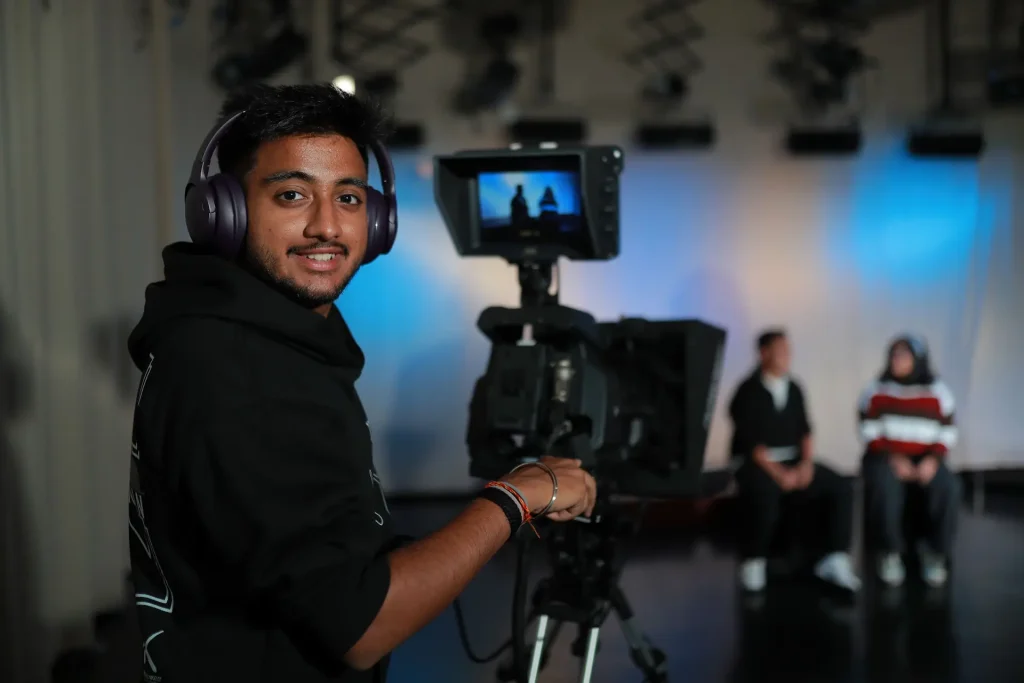
A Journalism and Media curriculum often includes reporting, interviewing, news writing, editing, multimedia storytelling, media law, media ethics, and digital publishing. Students may also work on student media platforms, practice field reporting, and build a portfolio across text, video, audio, and digital formats.
This makes the degree feel practical. You are not only studying communication. You are learning how to produce public-facing content under real constraints such as deadlines, format rules, and editorial standards.
For example, if you can imagine yourself covering a campus issue, interviewing students and faculty, then turning that material into a web story, video piece, or podcast episode, that is very close to Journalism and Media training.
Core Media and Communication courses
A Media and Communication curriculum often includes communication theory, media studies, media production, communication processes, audience analysis, digital media, ethics, and critical analysis of media systems. Depending on the university, students may also study public relations, strategic communication, media literacy, social media, representation, or communication research.
Compared with Journalism and Media, the curriculum is often wider and may feel less tied to one profession. You may still create media projects, but you are also more likely to examine how communication works in society and how media affects perception, culture, identity, and institutions.
That usually suits students who want more than one possible direction after graduation.
Practical work and portfolio building
Both majors can include practical work, but the type of practice is often different.
| Practical area | Journalism and Media | Media and Communication |
|---|---|---|
| Writing style | News writing, features, public-interest storytelling | Strategic, academic, analytical, campaign, or cross-platform communication |
| Production focus | News packages, interviews, podcasts, reports, digital stories | Media projects, communication campaigns, social content, audience-facing media work |
| Portfolio direction | Editorial and reporting samples | Broader communication and media portfolio |
| Typical outcome | A stronger journalism identity | A broader communication identity |
If your dream portfolio is full of reports, interviews, published articles, and multimedia stories, Journalism and Media usually fits better. If your ideal portfolio includes media content, campaign thinking, digital communication, and cross-platform audience work, Media and Communication may be more useful.
Similarities Between the Two Fields
These majors do overlap, and that overlap is exactly why students compare them so often.
Both fields usually help you become a stronger communicator. Both may improve your writing. Both may include media ethics, digital skills, audience awareness, storytelling, and multimedia tools.
Both fields can also connect to modern digital work. A Journalism and Media graduate may work in digital content or brand storytelling. A Media and Communication graduate may move into media production, communication strategy, or public-facing content roles. In real life, the boundaries are not always strict.
This is especially true now that digital platforms have changed the media landscape. A student might start in journalism and later move into content strategy. Another might study Media and Communication and later specialize in news or documentary storytelling.
So the question is not whether the fields touch each other. They do. The real question is which major gives you the stronger starting point for the kind of work you want most.
Career Paths and Industry Roles
Career planning is one of the most important parts of this decision, especially for international students who want a degree with practical outcomes.
The U.S. Bureau of Labor Statistics says that news analysts, reporters, and journalists keep the public updated about current events and noteworthy information. That is a strong career signal for Journalism and Media. The major connects naturally with reporting, editing, digital journalism, public-interest storytelling, and multimedia news work.
The U.S. Bureau of Labor Statistics says that public relations specialists create and maintain a positive public image for the clients they represent. That is a strong career signal for Media and Communication because broader communication degrees often lead into communication management, public relations, media planning, and audience-focused roles.
| Journalism and Media careers | Media and Communication careers |
|---|---|
| Reporter | Public relations specialist |
| Editor | Communication specialist |
| Multimedia journalist | Media planner |
| News producer | Strategic communication assistant |
| Content writer | Social media and content coordinator |
| Broadcast or digital news worker | Corporate communication coordinator |
| Documentary or public-interest storyteller | Media production or audience engagement specialist |
A simple scenario may help. If you want to investigate issues, interview sources, and publish stories that inform the public, Journalism and Media is usually the stronger academic path. If you want to work with organizations, audiences, campaigns, media strategy, or broader communication planning, Media and Communication often makes more sense.
That said, job titles vary by country, language, and employer. You should always look beyond the major name and review internship options, portfolio expectations, and actual course structure.
Which Major Is Better for You?
There is no universal winner. The better major depends on your strengths, interests, and long-term goals.
Choose Journalism and Media if you want a more direct path into reporting, editorial work, multimedia storytelling, interviews, and public information. It often suits students who are curious, observant, comfortable asking questions, and motivated by truth, evidence, and audience trust.
Choose Media and Communication if you want a broader major that can lead to communication roles across media companies, businesses, nonprofits, agencies, and digital platforms. It often suits students who like media but do not want to limit themselves to newsroom or reporting work.
If you are still unsure, ask yourself these practical questions:
| Question | If your answer is yes, consider… |
|---|---|
| Do I specifically want to report, investigate, and publish stories? | Journalism and Media |
| Do I want broader career flexibility across communication and media roles? | Media and Communication |
| Do I enjoy interviewing, fact-checking, and editorial work? | Journalism and Media |
| Do I enjoy audience strategy, media analysis, and communication across sectors? | Media and Communication |
| Am I choosing based on prestige only, without checking curriculum? | Pause and compare courses first |
This is where many students make a better decision after looking at real course lists instead of only degree names.
Studying These Majors in Turkey and Abroad
For international students, Turkey can be an interesting place to study media-related majors because universities may offer different combinations of journalism, communication, broadcasting, digital media, and public relations. Some programs are highly practical. Others are more academic. Some are taught in English. Others are taught in Turkish.
If you are considering Turkey or another study-abroad destination, you should verify the following points carefully:
| What to verify | Why it matters |
|---|---|
| Curriculum structure | The major title may look familiar, but course content may differ a lot by university |
| Language of instruction | This affects internship options, writing ability, and your comfort in class |
| Labs, studios, and student media | Practical fields need strong production and publishing opportunities |
| Internship pathways | Media-related degrees become stronger when students get real-world exposure |
| Portfolio support | A good program should help you graduate with publishable work or professional samples |
| Specialization options | Some universities let you move toward journalism, PR, production, or digital media over time |
A student who wants to work in Arabic or English digital media, for example, may care a lot about portfolio development and multilingual communication. Another student may care more about strategic communication and international career flexibility. The right university choice depends on that context.
If you also want a business-facing media path, you may want to compare this topic with Marketing. If you are more interested in creative visual storytelling, Visual Communication Design may also be relevant. StudySehir can help you shortlist the right major based on your strengths and career direction.
Common Mistakes Students Make
One common mistake is assuming that all communication-related majors are interchangeable. They are not. A degree with “media” in the title may still be very different from a journalism-centered program.
Another mistake is choosing the broader major only because it sounds safer, without checking whether the curriculum actually matches your goals. A broad program is useful, but if your real goal is reporting and editorial work, you may feel under-specialized later.
Some students make the opposite mistake. They choose Journalism and Media because they enjoy social media or content creation, then realize later that they were more interested in communication strategy, branding, or media planning than in reporting or journalistic practice.
A final mistake is ignoring practical outputs. In these fields, your portfolio matters. Your internships matter. Your language skills matter. The best major is not only the one with the nicest title. It is the one that helps you build real ability and credible work samples.
FAQ
Is Journalism and Media the same as Media and Communication?
No. They overlap, but they are not the same. Journalism and Media is usually more focused on reporting, interviewing, storytelling, and publishing information for public audiences. Media and Communication is usually broader and includes media theory, communication processes, audience analysis, and wider communication roles
Which major is better for international students?
Neither is automatically better. Journalism and Media may be better if you want a direct reporting or editorial path. Media and Communication may be better if you want broader flexibility across communication, digital media, and public-facing roles. The better choice depends on your goals, language ability, and preferred career direction.
Is Media and Communication easier than Journalism and Media?
Not necessarily. They are difficult in different ways. Journalism and Media can be demanding because of deadlines, reporting pressure, interviews, and practical output. Media and Communication can be demanding because of theory, analysis, research, and the breadth of topics you may need to understand.
Can I work in media if I study Media and Communication instead of Journalism?
Yes, often you can. Many Media and Communication graduates work in media-related roles, especially in digital content, public relations, media production, communication support, and audience engagement. But if you want a strong reporting identity, Journalism and Media may still be the more direct path.
Can Journalism and Media graduates work in PR or communication roles?
Yes. Journalism graduates often build strong writing, interviewing, and content skills that can transfer into PR, corporate communication, and content strategy. However, they may need to learn more about strategic communication or organizational communication depending on the role.
What should I compare before choosing between these majors?
Compare curriculum, practical training, portfolio opportunities, internship access, language of instruction, and career direction. The degree title alone is not enough.
References
[2] Media & Communication Studies | University of Washington Bothell
[3] News Analysts, Reporters, and Journalists | U.S. Bureau of Labor Statistics
[4] Public Relations Specialists | U.S. Bureau of Labor Statistics