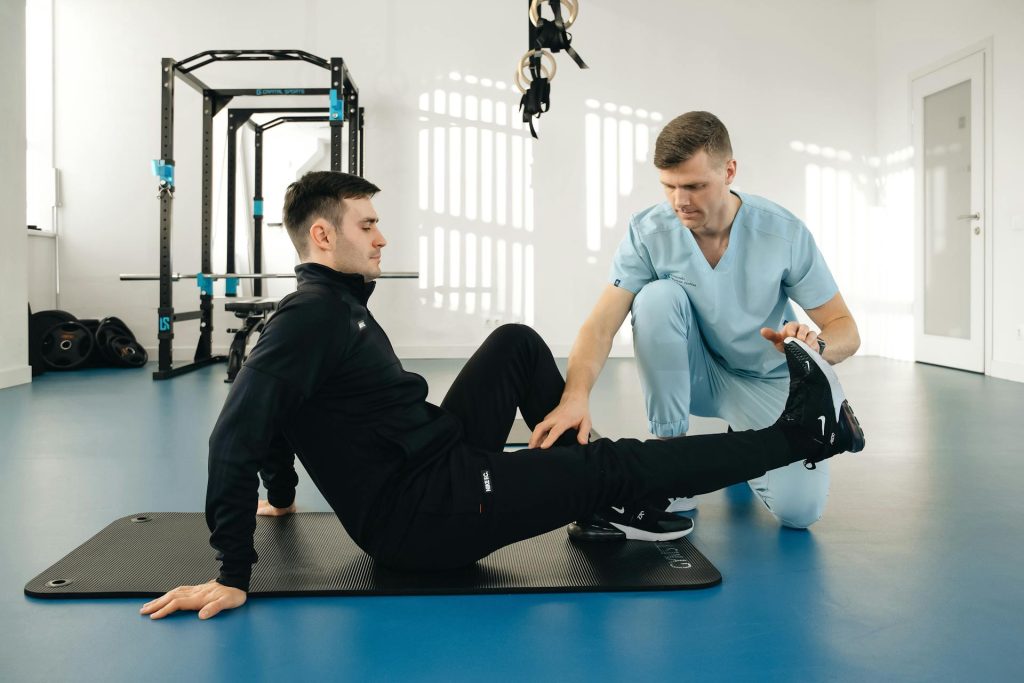
If you are comparing these two majors, you are probably trying to answer a very personal question. Do you want to support patients across the full care journey, or do you want to focus more specifically on recovery, movement, and physical function?
That is why students often hesitate between Nursing and Physiotherapy and Rehabilitation. Both are respected healthcare paths. Both involve direct patient contact. Both require science, communication, responsibility, and clinical training. Both can lead to meaningful careers in hospitals, clinics, rehabilitation settings, and community health environments. But they are not the same major, and they do not prepare you for the same kind of daily work.
The difference between nursing and physiotherapy and rehabilitation is mainly about scope and role. Nursing is broader and usually centers on patient care, monitoring, coordination, advocacy, and support across many health conditions and care settings. Physiotherapy and Rehabilitation is more focused on movement, physical function, pain management, mobility, and helping people recover or maintain independence after injury, illness, or disability.
In simple words, Nursing asks, How do we care for the patient as a whole across treatment, recovery, education, and coordination? Physiotherapy and Rehabilitation asks, How do we improve movement, reduce pain, restore function, and help the patient become more independent physically?
That difference affects what you study, how your practical training feels, where you may work after graduation, and what kind of patient relationship you will build over time.
A useful way to think about it is this: Nursing is broader across patient care and health settings, while Physiotherapy and Rehabilitation is more specialized around movement, function, and recovery.
If you want a major that keeps you close to broad patient care, hospital systems, and many possible care environments, Nursing may fit better. If you are drawn to recovery, exercise-based intervention, rehabilitation planning, and helping people regain physical ability, Physiotherapy and Rehabilitation may be the better match.
Quick Comparison Table, Nursing vs Physiotherapy and Rehabilitation
| Area | Nursing | Physiotherapy and Rehabilitation |
|---|---|---|
| Core focus | Broad patient care, monitoring, education, coordination, and advocacy | Movement, physical function, rehabilitation, pain management, and mobility |
| Main role | Supports patients across care journeys and health settings | Helps patients restore or improve physical ability and independence |
| Typical patient relationship | Often continuous, broad, and integrated with overall treatment plans | Often goal-based, function-focused, and rehabilitation-centered |
| Work settings | Hospitals, clinics, schools, home healthcare, nursing facilities, community settings | Clinics, hospitals, rehabilitation centers, patients’ homes, sports or mobility-related settings |
| Learning style | Broad healthcare foundation with patient care and clinical decision-making | Strong anatomy, movement science, biomechanics, exercise, and rehabilitation approach |
| Hands-on work | Patient monitoring, medication support, care coordination, education, documentation | Functional assessment, exercise therapy, mobility work, rehabilitation planning, physical intervention |
| Scope of care | Whole-patient support across many conditions | Physical recovery and movement-related outcomes within a defined therapeutic scope |
| Best fit for you if… | You want broad healthcare involvement and flexible patient-care roles | You want a movement-focused role built around rehabilitation and physical recovery |
| Common career direction | Registered nurse, clinical nurse, community nurse, school nurse, specialized nursing tracks | Physiotherapist, rehabilitation clinician, mobility specialist, musculoskeletal or neuro-rehab practitioner |
What Is Nursing?
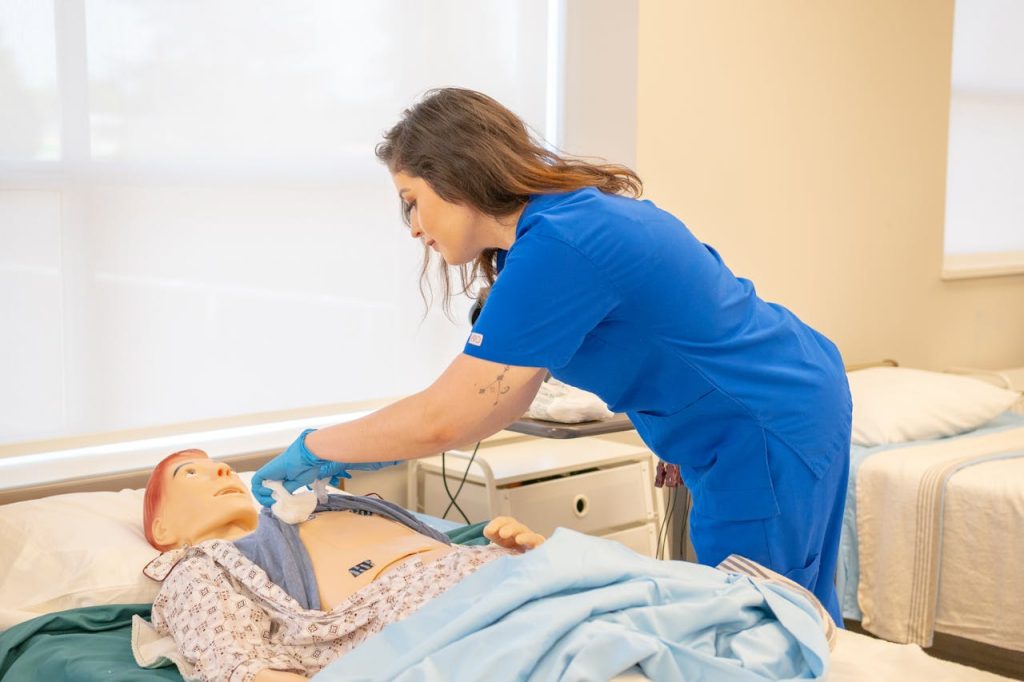
The American Nurses Association defines nursing as a profession that integrates the art and science of caring and focuses on the protection, promotion, and optimization of health and human functioning, the prevention of illness and injury, the facilitation of healing, and the alleviation of suffering through compassionate presence. ANA also describes nursing as the diagnosis and treatment of human responses and advocacy in the care of individuals, families, groups, communities, and populations.
The U.S. Bureau of Labor Statistics describes registered nurses as professionals who provide and coordinate patient care and educate patients and the public about various health conditions. That definition helps explain why Nursing is such a broad major. It is not limited to one body system or one kind of treatment. A nurse may be involved in assessment, monitoring, education, communication, documentation, coordination, and direct care across many types of patients and environments.
For many students, that breadth is one of nursing’s biggest strengths. You may work in a hospital, clinic, school, home healthcare setting, or community environment. You may later move toward pediatric care, surgical care, intensive care, oncology, women’s health, public health, or other professional pathways, depending on the system where you study and work.
If you want a broad care-focused role and like the idea of being closely involved in the patient journey from multiple angles, Nursing often feels like a strong fit.
If you want more context around this path itself, invite readers to continue with Study Nursing in Turkey: A Guide for International Students and What are the benefits of studying nursing? as natural next reads.
What Is Physiotherapy and Rehabilitation?
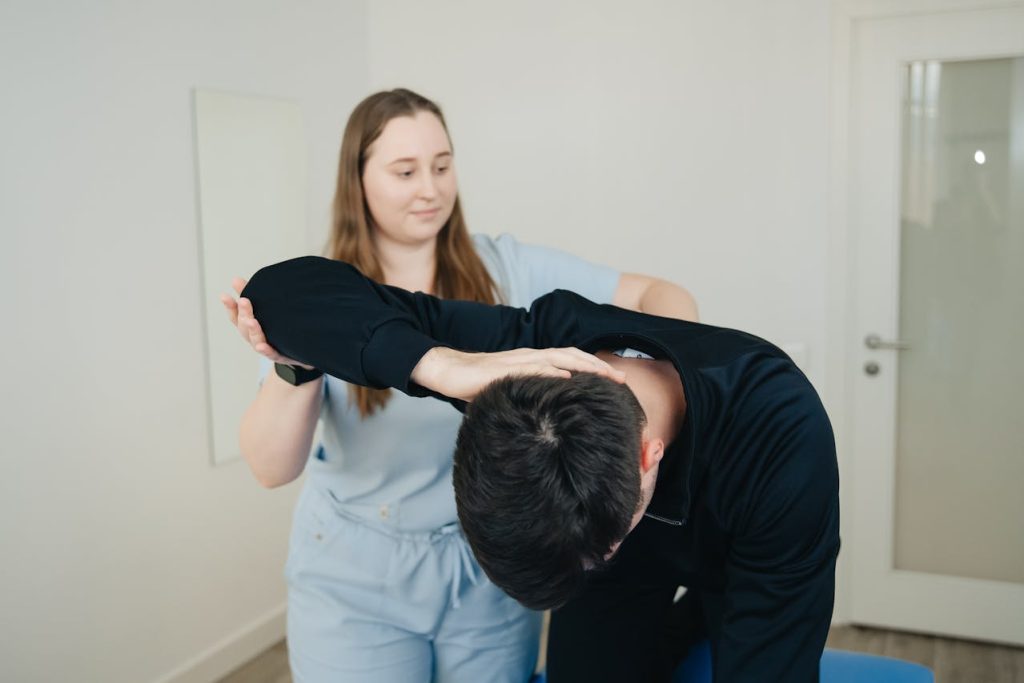
World Physiotherapy explains that physiotherapists provide services that develop, maintain, and restore people’s maximum movement and functional ability. It also notes that physiotherapists help people at any stage of life when movement and function are threatened by ageing, injury, disease, disorder, or environmental factors, and that the profession works across promotion, prevention, treatment, and rehabilitation.
The U.S. Bureau of Labor Statistics defines physical therapists as professionals who help injured or ill people improve movement and manage pain. The American Physical Therapy Association adds that physical therapists examine, diagnose, and treat individuals of all ages, helping them improve movement, restore function, prevent disability, and improve quality of life.
This shows why Physiotherapy and Rehabilitation is not just “general healthcare with exercise.” It is a defined therapeutic field centered on movement science, physical function, recovery planning, and measurable rehabilitation outcomes. A physiotherapist may work with a patient after surgery, after a sports injury, after a stroke, during chronic pain management, or during long-term mobility support.
For some students, this clearer therapeutic focus is a major advantage. Instead of staying broad across many dimensions of care, the field gives you an earlier identity connected to physical recovery, rehabilitation, and function.
Students who want a dedicated overview of this route can be invited to explore Study Physiotherapy and Rehabilitation in Turkey after this article.
The Main Difference Between Nursing and Physiotherapy and Rehabilitation
The main difference is broad patient-care responsibility versus specialized rehabilitation and movement-focused care.
Broad patient support vs movement-focused intervention
Nursing usually places you in a broader patient-care role. Nurses monitor patients, provide care, educate them, coordinate with other professionals, and support treatment plans across many conditions and settings.
Physiotherapy and Rehabilitation usually places you in a more specialized therapeutic role. The work focuses on examining movement and function, building treatment plans, helping patients manage pain, and guiding recovery through physical intervention and rehabilitation strategies.
If you imagine yourself asking, “How do I support this patient’s overall care and safety today?” Nursing may fit better. If you imagine yourself asking, “How do I help this patient walk better, move with less pain, or regain independence?” Physiotherapy and Rehabilitation may feel more natural.
Continuous care coordination vs goal-based functional recovery
Nurses are often deeply involved in ongoing patient support across treatment stages. They may observe changes, communicate with the wider healthcare team, educate patients and families, and help ensure continuity of care.
Physiotherapists also build ongoing patient relationships, but the relationship is often more function-centered. Progress is frequently measured through mobility, strength, pain reduction, balance, physical endurance, and independence in daily activities.
A simple real-life example makes this clearer. Imagine a patient recovering after surgery. A nurse may monitor the patient’s condition, pain level, medication needs, and overall safety as part of the care team. A physiotherapist may focus more on how that same patient regains mobility, restores strength, and safely returns to movement. Both roles matter, but the lens is different.
Whole-patient system awareness vs biomechanics and movement science
Nursing education often emphasizes broad patient needs, health response, communication, care planning, and practical support across many clinical situations.
Physiotherapy and Rehabilitation education tends to place stronger weight on movement science, anatomy, biomechanics, exercise, physical assessment, and rehabilitation planning.
This does not mean one major is more serious than the other. It means they train different professional instincts. Nursing often develops broad clinical awareness across many aspects of care. Physiotherapy and Rehabilitation often develops deeper focus on function, physical performance, and recovery.
What Will You Study in Each Program?

The best comparison is always curriculum, not title alone. Universities in Turkey and abroad may organize these programs differently, and course names vary by institution. Still, the overall pattern is usually clear.
What you study in Nursing
A nursing program usually combines foundational health sciences with clinical patient-care learning. Depending on the university, you may study anatomy, physiology, pharmacology, health assessment, patient care, communication, ethics, and clinical practice. ANA’s description of the nursing process also reflects how nurses are trained to assess, plan, implement, and evaluate care.
BLS notes that registered nurses may enter the profession through different education routes depending on the country and system, but the professional outcome still centers on patient care, coordination, and licensure. For international students, that means it is important to look beyond the major title and check the program structure, language of instruction, accreditation, and post-graduation licensing pathway.
Nursing usually suits students who are comfortable with broad responsibility. You may study many aspects of care rather than going deeply into one narrow therapeutic area from the beginning.
What you study in Physiotherapy and Rehabilitation
Physiotherapy and Rehabilitation programs usually include anatomy, physiology, biomechanics, kinesiology, neuroscience, pathology, exercise-based intervention, clinical reasoning, and rehabilitation practice. APTA notes that professional physical therapy education includes a strong mix of classroom, lab, and clinical education, and that core content areas often include biomechanics, neuroscience, pharmacology, pathology, behavioral sciences, evidence-based practice, and musculoskeletal and cardiopulmonary topics.
APTA also notes that approximately 77 percent of DPT education is classroom and lab study and 23 percent is clinical education, with students spending an average of 22 weeks in final clinical experience in the U.S. model. This is a useful reminder that the field is both scientific and very practical.
Physiotherapy and Rehabilitation often suits students who like structure, movement analysis, physical problem-solving, and measurable rehabilitation goals.
Clinical Training and Work Setting Differences
Clinical training matters because it shapes what your future daily life may actually feel like.
In Nursing, clinical training usually introduces you to broad care environments. Depending on the university and national system, this may include hospitals, medical-surgical units, community settings, outpatient care, or other patient-service environments. The daily rhythm often includes patient observation, communication, teamwork, documentation, and care implementation.
In Physiotherapy and Rehabilitation, clinical training often feels more assessment- and intervention-driven. Students may spend time learning how to observe movement, work on treatment exercises, support pain management, build rehabilitation plans, and track patient progress across mobility or function goals.
Work settings also differ. BLS states that registered nurses commonly work in hospitals, physicians’ offices, home healthcare services, nursing care facilities, outpatient clinics, and schools. BLS states that physical therapists commonly work in private offices and clinics, hospitals, patients’ homes, and nursing homes.
That means Nursing may appeal more to students who want flexibility across many care systems, while Physiotherapy and Rehabilitation may appeal more to students who want a setting centered on guided recovery and physical function.
Career Paths and Professional Routes
Both majors can lead to respected healthcare careers, but the pathways are not identical.
BLS reports that registered nurses had a 2024 median annual wage of $93,600, with employment projected to grow 5 percent from 2024 to 2034. BLS reports that physical therapists had a 2024 median annual wage of $101,020, with employment projected to grow 11 percent over the same period. These figures are useful for understanding labor-market context in the United States, but international students should not treat them as universal outcomes. Salaries, licensing rules, and role definitions vary by country, employer, specialization, and level of education.
The more important takeaway is role direction. Nursing often leads to broad patient-care opportunities and can branch into many specialties or advanced practice routes depending on national regulations and postgraduate study. Physiotherapy and Rehabilitation usually leads to roles centered on movement, rehabilitation, pain management, and physical recovery across patient populations.
If you are the kind of student who wants a broader starting platform inside healthcare, Nursing may offer more variety. If you already know you want a career built around physical recovery and rehabilitation, Physiotherapy and Rehabilitation may offer earlier clarity.
For readers still comparing adjacent health fields, this is a natural place to discover Choosing Your Path: Pharmacy vs. Nursing vs. Physiotherapy. Students who are thinking even more broadly about medical education abroad may also want to read Study Medicine in Malaysia: Requirements, Universities & Career Prospects and Top Medical Specialties for Postgraduate Studies in Turkey.
Which Major Fits You Better?
This part is not about prestige. It is about fit.
| If this sounds like you… | You may prefer |
|---|---|
| I want broad patient-care responsibilities and flexible work settings | Nursing |
| I want to support the full care journey and work closely with many kinds of patients | Nursing |
| I am interested in health, communication, monitoring, and care coordination | Nursing |
| I want to focus on mobility, physical recovery, and rehabilitation outcomes | Physiotherapy and Rehabilitation |
| I enjoy anatomy, movement, biomechanics, and exercise-based intervention | Physiotherapy and Rehabilitation |
| I like setting measurable physical goals and helping patients regain independence | Physiotherapy and Rehabilitation |
A small scenario may help. Imagine two students. One says, “I want to be in healthcare, but I want a broad role where I can work in different clinical environments and support the patient from many angles.” That student often fits Nursing. Another says, “I want to work directly on recovery, movement, and helping people regain function after injury or illness.” That student often fits Physiotherapy and Rehabilitation.
Neither answer is more impressive. The better choice is the one that matches how you want to care for people.
Studying These Health Majors in Turkey and Abroad
For international students, the decision is not only about the major. It is also about destination, language, accreditation, clinical training quality, and what happens after graduation.
In Turkey and other study destinations, program structure, internship opportunities, and licensing recognition can vary by university and country. That is why you should always verify the language of instruction, clinical training design, professional recognition rules, and whether the degree matches your long-term plan in the country where you want to build your career.
If you are still exploring destination options more generally, invite readers to continue with Study in Turkey: A Guide for International Students. If your current interest is more major-specific, Study Nursing in Turkey: A Guide for International Students and Study Physiotherapy and Rehabilitation in Turkey are the most natural next steps.
This is also where expert guidance matters. A good major on paper is not enough if the language, budget, training style, or recognition pathway does not match your real goals.
Common Mistakes Students Make
One common mistake is choosing based only on prestige or assumptions. Some students think Nursing is only bedside routine work, which is inaccurate because nursing includes coordination, advocacy, assessment, education, and diverse professional settings.
Another mistake is assuming Physiotherapy and Rehabilitation is only for sports injuries. In reality, the field also covers recovery after illness, surgery, disability, chronic pain, ageing-related function loss, and many other physical challenges.
A third mistake is ignoring licensing and destination differences. A major may sound ideal, but your long-term plan can be affected by local professional regulations, postgraduate requirements, and language expectations. This always needs verification through official sources and university-specific information.
The smartest way to choose is to compare five things clearly: curriculum, clinical training, work setting, patient role, and long-term career direction.
FAQ
Is Nursing harder than Physiotherapy and Rehabilitation?
They are difficult in different ways. Nursing is broad and responsibility-heavy because it involves patient care, monitoring, coordination, and work across many clinical situations. Physiotherapy and Rehabilitation is also demanding, but often in a more movement-science and rehabilitation-focused way, with strong emphasis on anatomy, function, assessment, and physical intervention.
Which major is better for international students?
There is no universal best option. The better major depends on your interests, the country where you want to study, language of instruction, budget, and where you hope to work after graduation. You should always verify recognition and licensing rules in your target destination.
Do Nursing and Physiotherapy and Rehabilitation both involve direct patient contact?
Yes. Both majors involve direct patient interaction, but the nature of that interaction differs. Nursing is usually broader across patient care and support, while Physiotherapy and Rehabilitation is more centered on movement, physical treatment, and recovery goals.
Can Physiotherapy and Rehabilitation lead to hospital work?
Yes. BLS states that physical therapists work in hospitals as well as private offices, clinics, patients’ homes, and nursing homes.
Can Nursing lead to work outside hospitals?
Yes. BLS states that registered nurses also work in physicians’ offices, home healthcare services, nursing care facilities, outpatient clinics, and schools.
How should I decide between Nursing and Physiotherapy and Rehabilitation?
Ask yourself what kind of care role feels more natural to you. If you want broad patient-care involvement, Nursing may fit better. If you want a more focused role centered on movement, rehabilitation, and physical independence, Physiotherapy and Rehabilitation may be the stronger choice.
References
[1] What is Nursing? Your Questions Answered | ANA
[2] Registered Nurses : Occupational Outlook Handbook, U.S. Bureau of Labor Statistics
[3] What is physiotherapy? | World Physiotherapy
[4] Physical Therapists : Occupational Outlook Handbook, U.S. Bureau of Labor Statistics