
If you are comparing these two majors, you are not choosing between a strong option and a weak one. You are choosing between two demanding, respected, patient-centered clinical paths that can both lead to meaningful healthcare careers.
That is exactly why this decision feels difficult. Medicine and Dentistry both require serious academic commitment. Both are science-heavy. Both involve direct patient care. Both can lead to high-responsibility professional roles. But they are not the same kind of career, and they do not train you to think, work, or specialize in the same way.
The difference between medicine and dentistry is mainly about scope and professional focus. Medicine prepares you to diagnose, treat, and manage health conditions across the whole body and across many clinical specialties. Dentistry focuses more specifically on oral health, teeth, gums, related oral structures, and hands-on treatment within a defined clinical area.
In simple words, Medicine asks, How do we understand and manage human health and disease across the body? Dentistry asks, How do we prevent, diagnose, and treat oral health problems with precision and direct clinical care?
That difference affects what you study, how early you begin practical procedural work, what your postgraduate training usually looks like, and what your daily professional life may feel like years later
A useful way to think about it is this: Medicine is broader and usually leads into many possible specialties after graduation, while Dentistry is narrower in body-system focus but often more hands-on earlier and more defined from the beginning.
If you feel drawn to broad diagnosis, hospital medicine, long-term specialization, and whole-body care, Medicine may be the better match. If you like precision work, oral health, procedural care, and a more focused clinical identity from the start, Dentistry may suit you better.
Quick Comparison Table, Medicine vs Dentistry
| Area | Medicine | Dentistry |
|---|---|---|
| Core focus | Whole-body health, disease diagnosis, treatment, and prevention across many specialties | Oral health, teeth, gums, mouth, and related structures |
| Main scope | Broad, system-wide, often leading to many medical specialties | More focused clinical domain from the beginning |
| Typical learning pattern | Heavy biomedical science, then broad clinical rotations and specialty training | Heavy biomedical science plus oral sciences, simulation, and earlier procedural practice |
| Early hands-on work | Usually builds gradually, especially in clinical years | Often begins earlier through preclinical simulation and procedure practice |
| Main work settings | Hospitals, clinics, public health, research, private practice, many specialty environments | Dental clinics, private practices, hospitals, community oral-health settings |
| Postgraduate training | Residency is typically required for independent medical practice in many systems | General practice may be possible after dental school in some systems, while specialties need additional training |
| Lifestyle pattern | Can involve long hours, on-call duties, emergency work, and hospital schedules depending on specialty | Often more clinic-based and structured, though workload depends on specialty and practice type |
| Best fit for you if… | You want broad medical knowledge and later specialty flexibility | You want focused oral-health care and hands-on procedural work |
| Common career direction | Physician, surgeon, specialist, clinician, academic medicine, public health | General dentist, specialist dentist, oral-health clinician, dental practice owner, academic dentistry |
What Is Medicine?

The American Association of Medical Colleges explains that physicians care for people of all ages by taking medical histories, performing physical examinations, conducting diagnostic tests, recommending treatment, conducting research, and advising patients on overall health and well-being. The U.S. Bureau of Labor Statistics similarly describes physicians and surgeons as professionals who diagnose and treat injuries or illnesses and address health maintenance.
Those definitions show why Medicine is such a broad field. A medical pathway is not limited to one organ system or one kind of clinical task. It can lead to primary care, surgery, internal medicine, pediatrics, neurology, cardiology, radiology, psychiatry, emergency medicine, and many other routes.
This breadth is one of medicine’s biggest strengths. A student may begin with a general interest in science and patient care, then later discover a strong interest in surgery, children’s health, mental health, oncology, family medicine, or another specialty. Medicine keeps that larger diagnostic and specialty map open for longer.
At the same time, that breadth comes with a long and intense training path. AAMC notes that becoming a doctor usually requires many years of education and specialty training, and BLS also explains that physicians often complete several years of internship, residency, and sometimes fellowship after medical school.
What Is Dentistry?
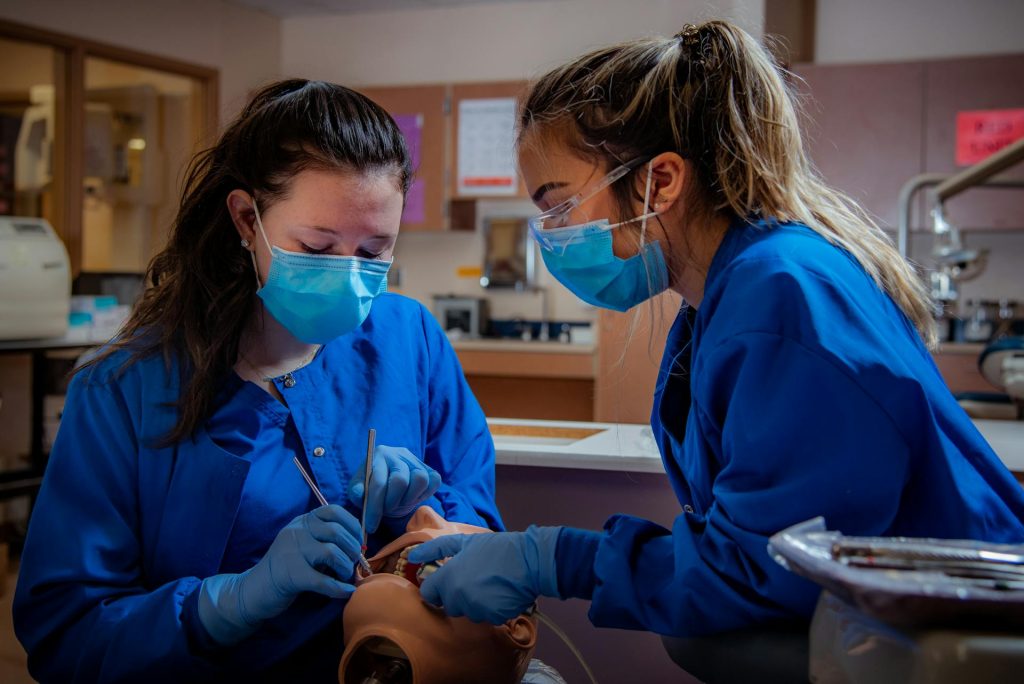
The American Dental Association frames dentistry as a career centered on making a lasting impact in oral health. The U.S. Bureau of Labor Statistics describes dentists as professionals who diagnose and treat problems with patients’ teeth, gums, and related parts of the mouth.
That definition helps explain why Dentistry is not simply a smaller version of Medicine. It is its own clinical profession with its own sciences, procedures, patient needs, and specialization routes. Dentistry focuses on oral anatomy, oral pathology, prevention, restoration, and procedural treatment in one clearly defined clinical area.
The American Dental Education Association also shows that dental education includes broad biological sciences, but with strong dental-oriented subjects such as oral anatomy, oral pathology, and oral histology, along with significant preclinical and clinical procedural training.
For many students, this clearer professional identity is a major advantage. Instead of spending many years moving through a wide medical map before later narrowing down, dentistry often gives earlier focus. You know from the beginning that your work will center on oral health, patient procedures, and clinical precision.
The Main Difference Between Medicine and Dentistry
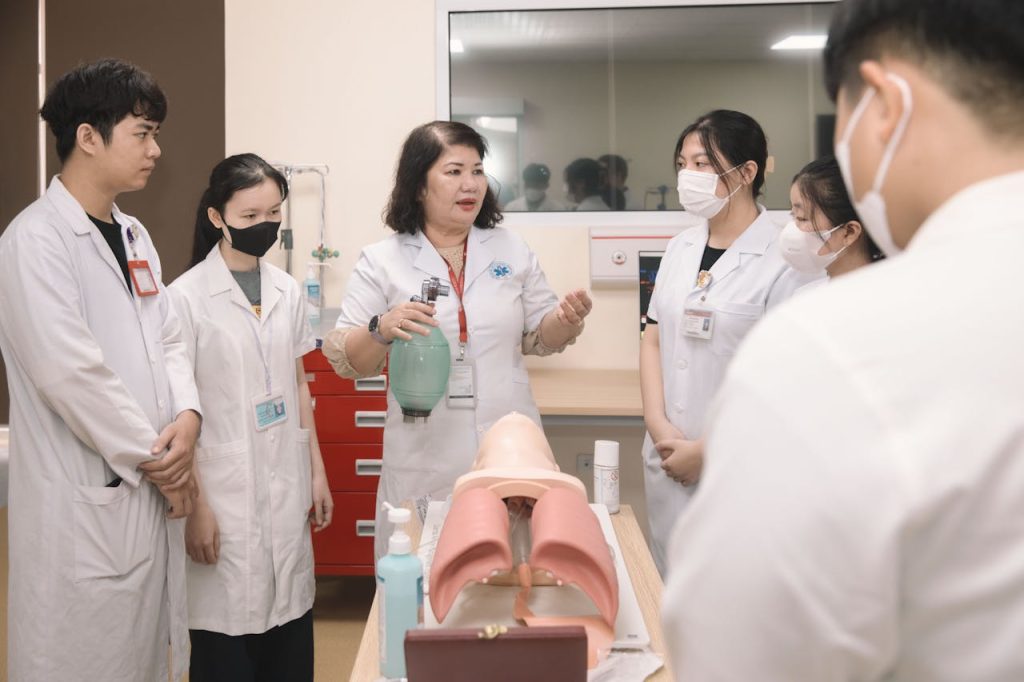
The main difference is broad whole-body medical care versus focused oral-health care with earlier procedural specialization.
Whole-body diagnosis vs oral-health specialization
Medicine usually trains you to think broadly across organ systems, patient histories, differential diagnoses, treatment plans, and multidisciplinary care. A physician may need to connect symptoms across many body systems and manage short-term and long-term health issues.
Dentistry usually trains you within a more clearly defined clinical field. The dentist still works with complex patients and important health decisions, but the professional lens is centered on oral health, teeth, gums, bite function, prevention, and dental procedures.
If you imagine yourself asking, “What is causing this patient’s illness, and how does it connect to the whole body?” Medicine may fit better. If you imagine yourself asking, “How do I diagnose, restore, protect, or improve oral health with technical accuracy?” Dentistry may feel more natural.
Broad specialty exploration vs earlier defined clinical identity
AAMC shows that medicine branches into primary care, surgery, and many specialist routes. That means a medical student often keeps multiple future identities open before residency. The field is broad first, specialized later.
Dentistry is different. From the start, your professional identity is tied to oral health. You may later specialize in areas such as orthodontics, pediatric dentistry, periodontics, endodontics, or oral and maxillofacial surgery, but the field is already narrower at entry level.
This is an important emotional difference, not only an academic one. Some students love Medicine because they do not want to narrow down too early. Others prefer Dentistry because they do want a clearer destination from the beginning.
Diagnostic breadth and hospital culture vs procedural precision and clinic culture
Medical training often includes hospital-based learning, broad clinical rotations, and specialties with unpredictable schedules, emergency situations, and on-call responsibilities.
Dental training is also intense, but ADEA’s curriculum overview shows a stronger early emphasis on simulation, preclinical technique, and procedural skill-building before patients are treated more extensively in later clinical years. BLS also notes that many dentists work in private practices or practice partnerships, which often creates a different day-to-day professional setting from hospital-based medicine.
This does not mean Dentistry is easier. It means the pressure is different. Medicine often tests breadth, endurance, and long-term specialty training. Dentistry often combines science knowledge with manual skill, precision, and repeated hands-on performance.
What Will You Study in Each Program?

The best comparison is always curriculum, not title alone. Universities in Turkey and abroad may structure these programs differently, and details vary by institution. Still, the overall pattern is usually clear.
Medicine curriculum and learning style
A medical pathway usually begins with foundational biomedical sciences and then expands into clinical reasoning and patient-centered training. BLS and AAMC describe the larger medical path as one that leads into structured clinical training and specialty preparation.
A medicine student typically spends a great deal of time on anatomy, physiology, pathology, pharmacology, diagnostics, and later on broad clinical exposure across different specialties. The purpose is not only to memorize disease facts, but to learn how to interpret symptoms, evaluate evidence, and make safe decisions across many medical situations.
That is why medicine often appeals to students who like complexity. One day you may be thinking about the cardiovascular system, another day pediatric development, another day infection, surgery, or mental health. The academic field is wide, and the diagnostic responsibility is equally wide.
Dentistry curriculum and learning style
ADEA explains that dental school is traditionally four years long, with the first two years focused heavily on biological sciences and early clinical education through simulation. The same source lists anatomy, physiology, biochemistry, microbiology, pharmacology, oral anatomy, oral pathology, and oral histology among common areas of study.
That list is important because it shows dentistry is not a light or narrow science degree. It is still deeply biomedical. But it is applied in a more focused way toward oral structures, oral disease, and dental procedures.
ADEA also notes that students often spend much of their early practical training working on models of the mouth and teeth before moving into stronger direct patient care in later years. For students who enjoy doing, building, correcting, shaping, and working precisely with their hands, that can be a very attractive feature.
Which one feels more practical during study?
Many students perceive Dentistry as more practically hands-on earlier because of simulation labs and repeated procedural training. Medicine, by contrast, often feels broader and more rotation-based, especially as students move into different clinical departments and later postgraduate training.
A simple scenario helps here. One student says, “I want to train my hands and eyes as much as my mind.” That student may feel more at home in Dentistry. Another says, “I want broad clinical exposure first, then I will decide which specialty environment fits me.” That student may feel more aligned with Medicine.
Clinical Training, Specialization, and Lifestyle Differences
This is one of the biggest decision areas for international students, because the difference between Medicine and Dentistry becomes much clearer once you think beyond the classroom.
Medicine usually requires longer postgraduate specialization
BLS explains that physicians and surgeons typically complete a bachelor’s degree, then a medical degree, followed by three to nine years of internship and residency depending on specialty, with possible additional fellowship training. AAMC similarly notes that becoming a doctor often takes around 11 to 16 years including undergraduate education, medical school, and specialty training.
This long training path creates major opportunities, but it also means delayed specialization decisions, longer supervised training, and in many specialties, demanding schedules.
Dentistry often becomes professionally focused earlier
ADEA presents dental education as a four-year professional program with heavy early science training and later clinical practice. BLS notes that dentists must be licensed and usually need to graduate from an accredited dental program and pass written and clinical exams.
In many systems, general dentists can move into practice sooner than physicians completing residency, while dental specialists continue into additional advanced training. This is one reason some students feel Dentistry offers an earlier sense of professional arrival.
Daily work style often feels different
AAMC notes that physician work hours can be long and unpredictable, and some doctors work more than 60 hours a week depending on specialty and practice type. BLS also shows that physicians may work in hospitals, clinics, nonprofit organizations, or government settings.
Dentistry often has a more clinic-centered routine, especially in general dental practice, although workload still depends on patient volume, specialty, and practice model. Many dentists work in their own businesses, partnerships, or associate roles in dental practices.
Students sometimes underestimate how important this difference is. Loving science is not enough. You also need to picture the rhythm of the life you want.
Career Paths and Professional Routes

Both fields lead to respected healthcare careers, but the career map after graduation looks different.
| Career dimension | Medicine | Dentistry |
|---|---|---|
| Core professional outcome | Physician or surgeon within a broad healthcare system | Dentist within oral-health care |
| Main practice range | General medicine plus many specialties and subspecialties | General dentistry plus dental specialties |
| Common settings | Hospitals, clinics, academic centers, public health, private practice | Private practice, dental clinics, hospitals, community oral-health settings |
| Business ownership potential | Possible, especially in private practice specialties | Often strong, especially in dental practice ownership |
| Typical training extension | Residency almost always central to career progression | Specialty training varies more by route and country |
Medicine career outlook
BLS reports that employment of physicians and surgeons is projected to grow 3 percent from 2024 to 2034, with about 23,600 openings each year on average over the decade. BLS also reports 839,000 jobs in 2024 and median pay equal to or greater than $239,200 per year.
Those numbers should not be used as a promise for every country or specialty, but they do show that medicine remains a large and significant professional field.
Dentistry career outlook
BLS reports that dentists are projected to grow 4 percent from 2024 to 2034, with about 4,500 openings each year on average over the decade. BLS lists 149,300 jobs in 2024 and a median annual wage of $179,210 in May 2024.
Again, international students should not treat U.S. labor data as a direct prediction for every destination. Still, it is a useful indicator that dentistry remains a strong professional field with clear demand and recognizable employment structures.
Which Program Is Better for You?
There is no universal winner here. The better major is the one that fits your interests, strengths, and long-term lifestyle goals more honestly.
Choose Medicine if you want broad clinical scope
Medicine may fit you better if you want to understand the whole body, keep many specialties open, work in broader healthcare systems, and are comfortable with a long training journey before full professional independence.
It may also suit you if you are energized by diagnosis, complex medical decision-making, multidisciplinary care, and the idea of choosing a specialty later rather than earlier.
Choose Dentistry if you want earlier focus and hands-on procedural work
Dentistry may fit you better if you like oral health, detail-oriented work, steady procedural improvement, patient interaction in a clinic setting, and a more clearly defined professional identity from the beginning.
It may also be the stronger match if manual dexterity, visual precision, and direct treatment sessions appeal to you more than broad hospital-based rotations.
Ask yourself three honest questions
First, do you want to work across the whole body or within oral health?
Second, do you want broad specialty exploration later, or a focused clinical identity earlier?
Third, which daily environment feels more like you, hospital and broad medical systems, or clinic-based oral-health care with strong procedural work?
Those three questions will often clarify more than rankings, prestige talk, or outside pressure.
Studying Medicine and Dentistry in Turkey and Abroad

For international students, this decision is not only about the major itself. It is also about where you want to study, in which language, under which recognition rules, and with what long-term licensing plan.
In Turkey and abroad, both Medicine and Dentistry can be attractive options, but students should never choose based on title alone. You need to verify program language, curriculum design, clinical training opportunities, internship structure, recognition, and future licensing requirements in the country where you may eventually want to work. These details vary by university and by destination.
If Medicine is your main interest, you can continue your research through The Ultimate Guide to Studying Medicine in Turkey for International Students (2026), Can I Study Medicine in Turkey in English? (2026): Your Definitive Guide, and Study Medicine in Turkey vs. Germany: Which is Better for International Students? Those readings can help you move from major comparison into destination comparison.
If cost is one of your biggest concerns, it is worth continuing with How Much Does it Cost to Study Medicine in Turkey for an International Student? (2026) and The Real Cost of Studying Medicine in Turkey for International Students (2026) so you can compare academic choice with financial planning in a realistic way.
If Dentistry feels closer to your goals, the next useful step is to explore The Complete Guide to Studying Dentistry in Turkey for International Students (2026) and Why Should You Study Dentistry in Turkey? Those articles can help you understand the dentistry route in more depth after this comparison.
A practical rule is simple. If you may want to practice in another country later, check licensing and recognition early, not after graduation. That is especially important for high-regulation professions such as Medicine and Dentistry.
Common Mistakes Students Make
One common mistake is choosing Medicine only because it sounds broader or more prestigious, without thinking seriously about the training length, residency path, and lifestyle reality.
Another common mistake is choosing Dentistry only because it appears shorter or more controlled, without asking whether oral health and repeated procedural work genuinely fit your interests and strengths.
A third mistake is ignoring destination rules. International students sometimes compare majors correctly but compare countries poorly. A strong choice on paper can become a difficult choice later if language, recognition, or licensing issues are not checked early.
A final mistake is focusing too much on public opinion. Families, friends, and social media often simplify this decision into status, salary, or difficulty. In reality, the better question is whether the training style and long-term professional life match who you are.
FAQ
Is Medicine better than Dentistry?
Not automatically. Medicine is broader and usually keeps more specialty options open later, while Dentistry is more focused and often more procedural from the beginning. The better choice depends on your interests, strengths, and preferred work style.
Is Dentistry easier than Medicine?
Neither path is easy. Medicine often involves broader diagnostic training and longer postgraduate specialty training, while Dentistry combines intense science learning with manual precision and repeated hands-on skill development.
Which major has more hands-on practice?
Dentistry often feels more hands-on earlier because dental education commonly includes simulation and procedural practice in the early years. Medicine becomes highly clinical too, but the learning pattern is usually broader and more rotation-based.
Which major takes longer?
Medicine usually leads to a longer overall training path because postgraduate residency is a central part of physician training. Dentistry is still demanding, but the route to general practice can be shorter in some systems, while specialties require additional training.
Which is better for studying in Turkey as an international student?
That depends on the university, language of instruction, recognition, costs, and where you want to practice later. For both majors, you should verify these points directly with the university and with the relevant authorities in your target country before making a final decision.
Can a Dentistry student move into Medicine later?
In most systems, these are separate professional pathways with separate admissions, curricula, and licensing structures. A student usually does not simply shift from one into the other without starting a different formal route. The exact rules vary by country and university.
References
[1] What To Consider as You Decide on a Career in Medicine | Students & Residents | AAMC
[2] Physicians and Surgeons | Occupational Outlook Handbook | U.S. Bureau of Labor Statistics
[3] Career Pathways | American Dental Association
[4] Dental School Curriculum | ADEA
[5] Dentists | Occupational Outlook Handbook | U.S. Bureau of Labor Statistics
[6] Is Dental School Easier Than Medical School? | Tiber Health